

June 10, 2026
Software Engineer Jobs in 2026: The Practical Workflow Guide for SaaS Buyers and Productivity Teams
Software engineer jobs are not just hiring decisions. They are workflow decisions that affect tools, delivery speed, support load, vendor choices, and team productivity.
Hiring for software engineer jobs sounds simple until the work hits production.
A small SaaS team wants features shipped faster. A business team wants integrations cleaned up. A founder wants fewer vendor workarounds. Someone says the company needs a software engineer. Then the job post goes live with a title, a stack, and a salary band.
Teams think the problem is finding enough qualified engineers. The real problem is defining the work system the engineer will enter.
That changes the conversation. Software engineer jobs are not just headcount. They are decisions about ownership, tooling, business process, delivery risk, automation, and how much software your team should build instead of buy.
Table of contents
- Why software engineer jobs are a workflow problem
- Map demand before hiring
- Software engineer jobs by operating model
- Design the role architecture
- Build the productivity stack around the job
- Run a hiring workflow that tests real work
- What breaks when software engineer jobs are designed badly
- Measure software engineer jobs with operating metrics
- Use engineering roles to make better SaaS buying decisions
- How saasrow.com fits the software engineer jobs conversation
Why software engineer jobs are a workflow problem
Software engineer jobs are often treated as recruiting artifacts: job description, compensation range, interview loop, offer. That is too narrow.
A software engineer enters an existing workflow. If the workflow is messy, the engineer inherits unclear ownership, undocumented systems, vague requests, inconsistent priorities, and tools that do not talk to each other. The result is predictable: slower delivery, avoidable rework, and a growing belief that engineering is the bottleneck.
A useful way to think about it is this: the job is not the person. The job is the operating system around the person.
The title is not the job
A title like frontend engineer, backend engineer, full-stack engineer, integrations engineer, data engineer, or platform engineer gives a rough shape. It does not define the work.
For a small SaaS company or productivity-focused team, the practical questions are more specific:
- Will this person own customer-facing product code?
- Will they connect SaaS tools and automate internal workflows?
- Will they reduce support tickets caused by broken processes?
- Will they maintain vendor APIs, billing logic, reporting, or data syncs?
- Will they create new software, improve existing software, or keep fragile systems alive?
Those are different jobs. Posting one generic role and hoping the right person adapts is how teams create expensive ambiguity.
Practical rule: If two people on the leadership team cannot describe the same first 90 days for the role, the software engineer job is not defined yet.
Why this matters more in 2026
In 2026, most teams already run on software. Even non-technical teams depend on CRM platforms, billing tools, analytics dashboards, automation platforms, messaging apps, spreadsheets, ticketing systems, and customer portals.
The engineer is rarely starting from a blank page. They are entering a business full of existing software decisions. Some are good. Some are accidental. Some were made by whoever had a credit card and a deadline.
This makes software engineer jobs more operational than many teams expect. The engineer may need to understand APIs, permissions, data models, support processes, customer onboarding, reporting requirements, and vendor limits before writing meaningful code.
Related reading from our network: teams working remotely face similar coordination issues when choosing cloud based productivity and collaboration tools, because the tool is only useful if the workflow around it is designed.
Who should own the role design
The mistake teams make is assigning role design entirely to HR or recruiting. Recruiting can run the process. It should not be responsible for defining the operating problem.
The owner should usually be the person accountable for the business outcome: founder, product lead, engineering manager, operations lead, or department head. Recruiting can translate that into a job post, but the work architecture needs to come from the business.
A simple ownership split works well:
- Business owner defines the workflow problem.
- Engineering owner defines technical boundaries and risks.
- Operations owner defines handoffs, support impact, and reporting needs.
- Recruiting owner designs the candidate process.
That makes the role easier to evaluate and easier to manage once the person starts.
Map demand before hiring
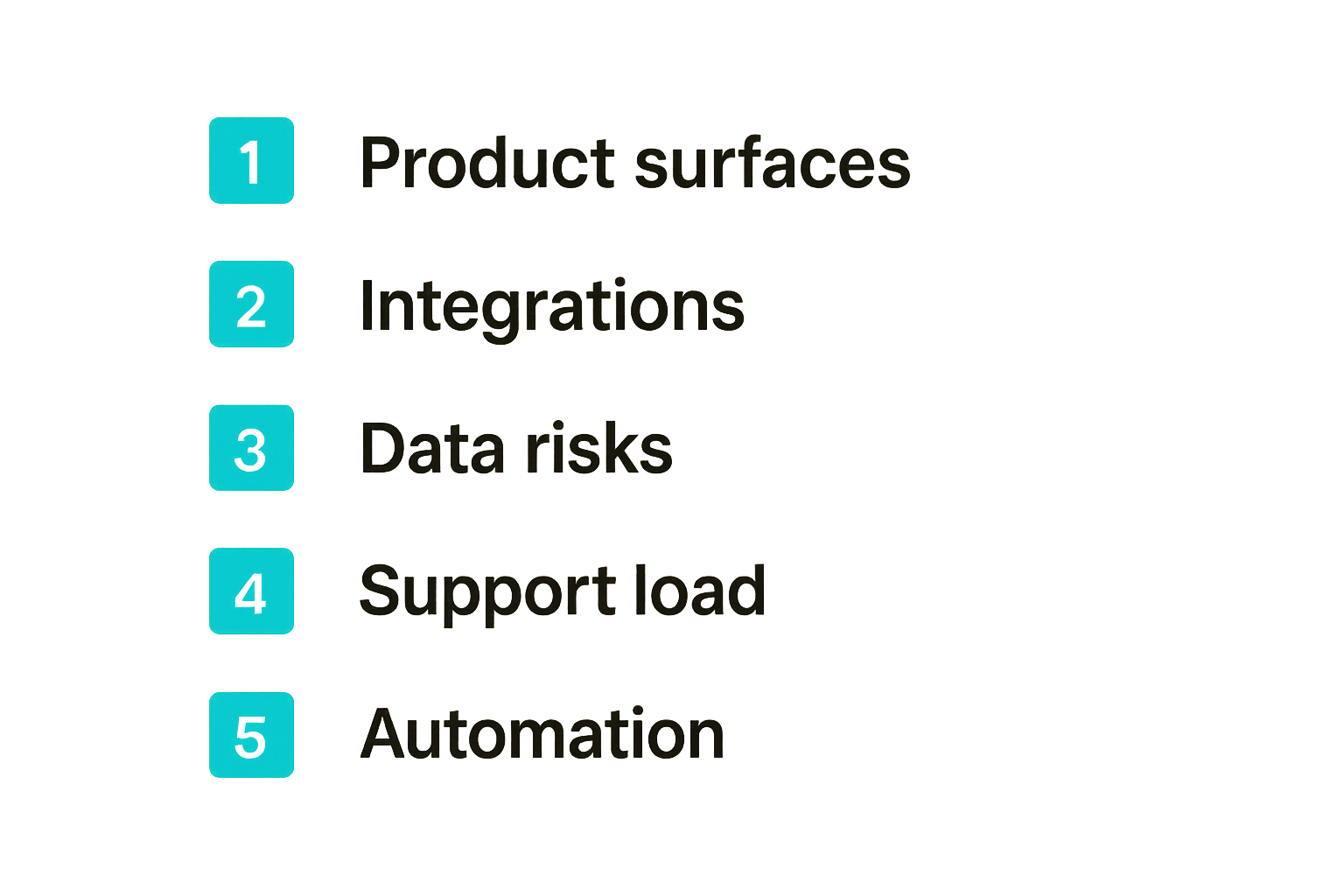
Before opening software engineer jobs, map the demand that is creating the hiring pressure. Most teams skip this and jump straight to job titles.
The practical question is not, do we need an engineer? The practical question is, what recurring work needs engineering ownership, and why is it not being handled today?
Find the work hiding inside tools
Many engineering needs are buried inside SaaS tools. Nobody calls them engineering problems at first. They show up as manual exports, duplicate data entry, broken automations, unreliable reports, or customer support workarounds.
Look across your tools and ask:
- Which workflows require manual copy-paste between systems?
- Which reports require cleanup every week?
- Which customer issues require someone to check three tools before answering?
- Which automations fail silently?
- Which vendor limits force the team into spreadsheets?
This is where software engineer jobs often create the most leverage for small teams. Not by building a giant custom platform, but by removing recurring friction from the operating system of the business.
For example, billing and invoicing workflows often reveal hidden engineering demand. If your billing lifecycle involves approvals, retries, tax handling, usage data, CRM handoffs, or month-end reconciliation, choosing tools by workflow matters more than choosing the best-looking dashboard. That is the same operating lens used in our guide to invoicing software in 2026.
Separate product work from operations work
Product work creates or improves the thing customers use. Operations work improves how the business runs. Both can require engineering, but mixing them without priority rules creates conflict.
A product engineer might ship a new onboarding flow. An operations-focused engineer might automate account provisioning between the CRM, billing system, and support desk. A platform engineer might improve deployment, monitoring, and internal developer tools.
All are valuable. They should not be treated as interchangeable.
A useful mapping table:
| Demand type | Example | Best-fit role shape | Risk if unclear |
|---|---|---|---|
| Customer product | New feature, onboarding, UI fixes | Product or full-stack engineer | Roadmap delays |
| Internal automation | CRM to billing sync, reporting cleanup | Integrations or operations engineer | Manual work keeps growing |
| Infrastructure | Deployments, observability, permissions | Platform or DevOps-oriented engineer | Fragile releases |
| Data workflow | Metrics, pipelines, dashboards | Data engineer or analytics engineer | Bad decisions from bad data |
| Vendor extension | API adapters, webhooks, custom scripts | Backend or integrations engineer | Vendor sprawl |
Look for recurring manual glue
Manual glue is the best signal that an engineering role may be needed. One-off work is not enough. Recurring work is different.
Examples include:
- Weekly CSV exports that feed reporting.
- Manual account setup after a customer signs.
- Support agents checking logs because product telemetry is missing.
- Finance reconciling usage data by hand.
- Sales operations maintaining fragile no-code automations.
Practical rule: Do not hire an engineer to rescue one messy project. Hire when recurring workflow debt is large enough to justify ownership.
Software engineer jobs by operating model
Not all software engineer jobs need to be full-time roles. The operating model should match the work, risk, and maintenance burden.
This matters for SaaS buyers and small business teams because the wrong model creates long-term cost. A contractor can ship a useful integration. But if nobody owns monitoring, credentials, documentation, and support, the team inherits a fragile system.
Full-time engineer
A full-time engineer makes sense when the work is continuous, strategic, or tightly connected to core business operations.
Good fit:
- Product roadmap work with ongoing iteration.
- Internal systems that change frequently.
- Customer-facing workflows where quality affects retention.
- Sensitive data or permissions where access needs tight control.
- Multiple systems requiring ongoing ownership.
Full-time roles work best when the team has enough management capacity. An engineer without priorities, review, and context will either drift into random tasks or become the person everyone interrupts.
Contract engineer
A contract engineer can be a good fit for scoped work: migration, integration, prototype, audit, dashboard, API connector, or technical cleanup.
Good contract work has a clear finish line:
- Define the workflow and success criteria.
- Specify systems, credentials, and data boundaries.
- Agree on deliverables and documentation.
- Include handoff, monitoring, and failure handling.
- Decide who owns the work after delivery.
What breaks in practice is the handoff. Teams pay for code, not operations. Then the original contractor moves on, an API changes, and nobody knows how the integration works.
Agency or embedded vendor
An agency or embedded technical vendor can help when the work requires a small team rather than one person. This can include larger migrations, custom portals, analytics systems, workflow automation, or multi-tool integration projects.
The tradeoff is dependency. Agencies often move faster at the start because they bring process and staffing. But if the team does not preserve ownership internally, it can become dependent on the agency for every change.
A good agency engagement should leave behind:
- Architecture notes.
- Runbooks.
- Access inventory.
- Deployment instructions.
- Known limits.
- Clear support boundaries.
Related reading from our network: technical work that depends on specialized compute has the same ownership problem; this architecture guide to IBM quantum computing is a useful adjacent example of why routing, jobs, validation, and handoffs matter beyond the headline technology.
Design the role architecture
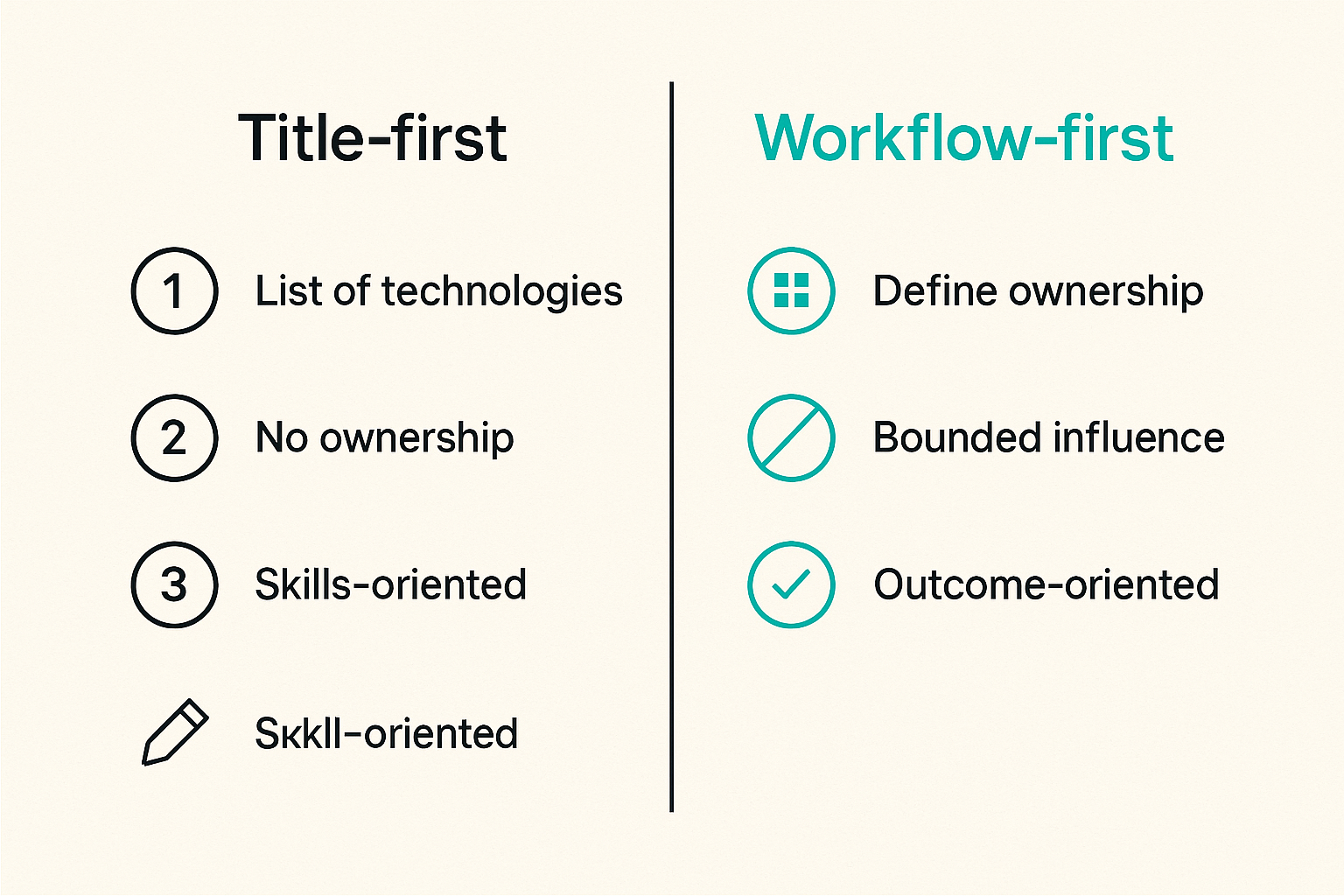
Once demand is mapped, design the role. This is where many software engineer jobs either become productive or become vague internal service desks.
The mistake teams make is writing a job description as a list of technologies. JavaScript, Python, React, SQL, AWS, APIs. Those may matter, but they are not the architecture of the job.
Define ownership boundaries
Ownership boundaries answer the question: where does this person have authority, and where do they only contribute?
Examples:
- Owns customer onboarding automation from signup to account activation.
- Owns API integrations between billing, CRM, and product usage systems.
- Owns internal reporting pipelines, not business metric definitions.
- Owns frontend implementation, not product strategy.
- Owns deployment reliability for one application, not all company infrastructure.
Without boundaries, every technical question flows to the engineer. That sounds efficient for about two weeks. Then interruptions consume the role.
Practical rule: Every software engineer job should define what the engineer owns, what they influence, and what they explicitly do not own.
Write outcomes before skills
A strong job design starts with outcomes:
- Reduce manual account provisioning from hours to minutes.
- Improve deployment reliability and rollback confidence.
- Ship customer-facing product improvements on a predictable cadence.
- Replace spreadsheet-based reporting with trusted automated dashboards.
- Stabilize integrations that affect billing, support, and customer success.
Then list skills that support those outcomes.
Weak version:
- Must know Node, React, SQL, and AWS.
Better version:
- Build and maintain API integrations between customer data, billing, CRM, and product systems. Comfortable with Node or similar backend language, relational data models, webhooks, authentication, logging, and operational documentation.
The second version tells candidates what judgment they will need. It also helps interviewers test the right things.
Make support and maintenance explicit
Software work does not end when code ships. Someone must own monitoring, credentials, retries, data quality, user feedback, documentation, and vendor changes.
For internal workflow engineering, maintenance can be the majority of the real value. A small script that saves five hours per week is useful only if it keeps working and someone knows how to fix it.
A practical role definition should include:
- Expected on-call or support responsibilities, if any.
- Documentation standards.
- Monitoring and alert expectations.
- Change management for vendor APIs.
- Security and permission requirements.
- Handoff process for operational teams.
This is not bureaucracy. It is how small teams avoid building invisible infrastructure that only one person understands.
Build the productivity stack around the job
A software engineer is only as effective as the operating environment allows. The stack around the role should make work visible, reviewable, secure, and maintainable.
This does not require enterprise process. It does require discipline.
Source control and delivery hygiene
Every engineering role should have a clear source control and delivery path. Even for internal scripts and automation, the team needs version history, review, and rollback.
A minimal setup:
engineering_baseline:
  source_control: required
  code_review: required_for_production_changes
  environments:
    - development
    - staging_or_test
    - production
  secrets: managed_outside_code
  deployment_notes: required
  rollback_plan: required_for_customer_impacting_changes
For a small team, this may feel heavy. It is lighter than debugging a production integration from a laptop folder named final-v3-new.
Issue tracking and decision records
Issue tracking is not just for engineers. It is how the team decides what work exists, why it matters, and what state it is in.
Good tickets include:
- Business problem.
- Affected users or teams.
- Systems involved.
- Acceptance criteria.
- Risk or dependency notes.
- Owner and reviewer.
For bigger decisions, use short decision records. They do not need to be formal essays. A few paragraphs are enough:
- Context.
- Decision.
- Alternatives considered.
- Consequences.
- Review date, if needed.
This prevents the same arguments from reopening every month.
Communication and access control
Communication tools matter because engineering work crosses functions. Product, sales, support, finance, and operations may all depend on the same technical changes.
Encrypted messaging, channel structure, and permission design are part of the productivity stack. If sensitive customer data, credentials, or incident details are discussed in chat, the team needs rules. Our guide to encrypted messaging software for SaaS teams covers this from a workflow and rollout perspective.
Access control should follow the role, not personal convenience. When an engineer joins, changes roles, or leaves, the team should know which systems are affected.
Minimum access inventory:
- Code repositories.
- Cloud accounts.
- SaaS admin panels.
- Databases and analytics tools.
- Billing and customer systems.
- Automation platforms.
- Incident and monitoring tools.
Run a hiring workflow that tests real work
Hiring software engineers is hard because interviews often test the wrong signal. Teams over-index on trivia, puzzle performance, or a candidate sounding confident in tools the interviewer recognizes.
A better process tests how the person approaches the actual operating problem.
Start with a work sample
A work sample should be small, relevant, and respectful of time. It should not be unpaid consulting. The goal is to see how the candidate reasons.
Examples:
- Review a simplified integration design and identify failure modes.
- Explain how they would improve a slow internal workflow.
- Debug a small API or data transformation issue.
- Write a short technical plan for a feature with ambiguous requirements.
- Refactor a small code sample and explain tradeoffs.
For non-engineering stakeholders, the most useful output is often not the code. It is the explanation: what did the candidate notice, what risks did they flag, and what questions did they ask?
Use interviews to test judgment
Good engineers make tradeoffs. The interview should create space for that.
Ask questions like:
- When would you automate this, and when would you leave it manual?
- What would you monitor after shipping this integration?
- How would you handle a vendor API rate limit?
- What documentation would another engineer need?
- What would make you push back on this request?
These questions reveal operating judgment. They also show whether the candidate can explain technical decisions to people who are not engineers.
Avoid hiring for tool trivia
Tool knowledge matters, but trivia is a weak proxy for capability. A candidate can memorize framework details and still design fragile systems. Another candidate may need a week to learn your stack but bring strong debugging, documentation, and product sense.
The practical question is whether the person can operate in your environment.
Use a scorecard like this:
| Signal | Strong evidence | Weak evidence |
|---|---|---|
| Problem framing | Clarifies goals and constraints | Jumps to implementation |
| Maintainability | Mentions testing, docs, ownership | Ships without handoff plan |
| Collaboration | Explains tradeoffs clearly | Hides behind jargon |
| Business sense | Connects work to user impact | Focuses only on code elegance |
| Tool fit | Can learn and adapt | Requires exact familiar stack |
What breaks when software engineer jobs are designed badly
Poorly designed software engineer jobs do not fail all at once. They degrade quietly. The engineer stays busy, the backlog grows, and the business still feels slow.
What breaks in practice is ownership.
The backlog becomes a dumping ground
When the job is vague, every technical annoyance becomes a ticket. Fix this report. Update this form. Check this integration. Build this dashboard. Add this button. Investigate this vendor issue.
Some of those tasks matter. Many are symptoms of unclear process or poor SaaS choices.
A healthy backlog has prioritization logic. A dumping-ground backlog has urgency, politics, and whoever asks loudest.
What works:
- One intake path.
- Clear business owner for requests.
- Prioritization by impact and risk.
- Explicit capacity for maintenance.
- Regular cleanup of stale items.
What fails:
- Slack requests treated as commitments.
- No difference between bugs, enhancements, and ideas.
- No review of whether a SaaS tool should solve the problem.
- No owner for rejected or deferred work.
The engineer becomes internal support
In many small companies, the first engineer becomes the answer to every software problem. Login issue? Ask the engineer. Report mismatch? Ask the engineer. Vendor error? Ask the engineer. Spreadsheet formula broke? Ask the engineer.
This can be useful temporarily. Long term, it destroys focus.
The fix is not to make the engineer less helpful. The fix is to create support boundaries:
- Define which systems engineering supports directly.
- Route user issues through a ticket or helpdesk process.
- Document common fixes.
- Train operations owners on tool administration.
- Escalate only when engineering judgment is required.
The business buys software around engineering
Another failure mode is tool sprawl. Business teams get tired of waiting for engineering, so they buy software to solve local problems. Sometimes that is correct. Sometimes it creates more integration debt.
This is especially common with productivity tools, reporting platforms, automation apps, and customer operations software. Each tool solves a surface problem and creates new questions about data, access, billing, workflow, and support.
This is why software engineer jobs and SaaS buying decisions should not be isolated. The engineer does not need to approve every tool, but the organization needs a lightweight architecture review for software that affects shared data or customer workflows.
For billing-adjacent systems, this is similar to the workflow-first approach in our earlier invoicing software workflow guide, where the real decision is not the invoice screen but the lifecycle around approvals, payments, reconciliation, and exceptions.
Measure software engineer jobs with operating metrics
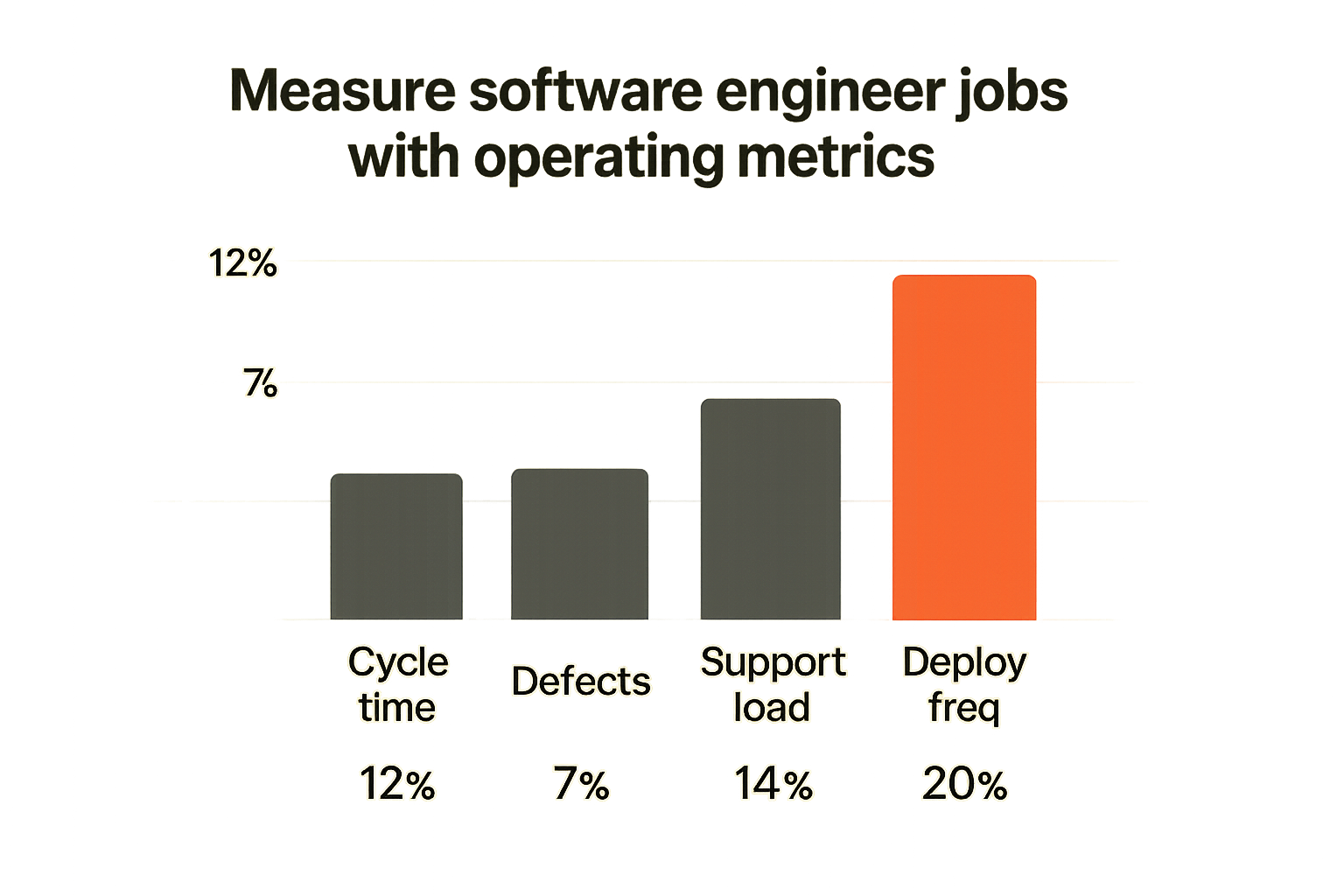
If you cannot measure the role, you will manage by anecdotes. That usually means the loudest complaint wins.
Metrics for software engineer jobs should not be vanity metrics. Lines of code, number of tickets closed, or hours logged can be misleading. The goal is to measure whether engineering work improves the operating system of the business.
Delivery metrics
Delivery metrics show whether work moves through the system predictably.
Useful measures include:
- Cycle time from accepted request to production.
- Deployment frequency for owned systems.
- Blocked time caused by missing decisions or access.
- Rework caused by unclear requirements.
- Percentage of work planned versus interrupt-driven.
For small teams, do not overcomplicate this. A monthly review is enough to see patterns.
Practical rule: Measure the flow of work, not the busyness of the engineer.
Quality and support metrics
Quality metrics show whether shipped work is stable and supportable.
Useful measures include:
- Bugs or regressions by system.
- Support tickets caused by workflow failures.
- Incident count and severity.
- Time to detect and resolve failures.
- Number of undocumented production scripts or automations.
These metrics matter because engineering value is not just shipping. It is reducing future drag.
Business workflow metrics
Business workflow metrics connect engineering to outcomes non-engineers understand.
Examples:
- Time to onboard a customer.
- Manual hours spent on reporting.
- Billing exceptions per month.
- Support handoffs per issue.
- Sales operations cleanup work.
- Time from signed contract to active account.
A simple dashboard can separate engineering throughput from business impact:
| Metric category | Example metric | Why it matters |
|---|---|---|
| Flow | Cycle time | Shows delivery predictability |
| Quality | Regression count | Shows stability |
| Support | Tickets from workflow failures | Shows operational drag |
| Automation | Manual hours removed | Shows productivity gain |
| Business | Onboarding time | Shows customer impact |
This is where the conversation changes. Instead of asking whether the engineer is busy, the team asks whether the system is getting better.
Related reading from our network: security teams face the same design issue with early-career roles; this guide to entry level cybersecurity jobs frames the work as safe workflows, access, metrics, and career paths rather than just filling seats.
Use engineering roles to make better SaaS buying decisions
Software engineer jobs should influence how a team buys software. Not because engineers should control procurement, but because software purchases create technical and operational consequences.
The UI is not the whole system. The real work is state, data, integrations, permissions, support, reporting, and change management.
Build versus buy is an ownership question
The build-versus-buy decision is often framed as cost. That is incomplete.
A better question is: who will own the workflow over time?
Buy when:
- The workflow is standard and vendor maturity is high.
- Compliance, uptime, or support would be expensive to own.
- The team does not need deep differentiation.
- Integration needs are manageable.
Build when:
- The workflow is core to your differentiation.
- Vendor tools cannot support required logic.
- Data needs are unusual or sensitive.
- Long-term customization matters more than quick setup.
Hybrid is common. A team may buy a CRM, billing tool, or support platform, then build connectors, reporting, or customer-specific logic around it.
Vendor fit depends on integration load
A SaaS tool is not just a feature checklist. It is an integration endpoint in your operating system.
Before buying, ask:
- Does it have an API?
- Are webhooks reliable and documented?
- Can data be exported cleanly?
- How does it handle roles and permissions?
- What happens when syncs fail?
- Are rate limits clear?
- Can your team test changes safely?
If the answer is unclear, the hidden cost may land on engineering.
This does not mean every tool needs a developer review. It means tools that touch customer data, billing, identity, reporting, or core workflows deserve technical scrutiny before purchase.
Productivity tools should reduce coordination debt
Productivity software often promises speed. In practice, it can add coordination debt if every team chooses its own tool and nobody owns the workflow.
Good productivity software makes work more visible and easier to hand off. Bad productivity software creates more places to check.
Evaluate tools by asking:
- Does this reduce status meetings or create more of them?
- Does it preserve context around decisions?
- Does it integrate with the systems where work actually happens?
- Does it improve security and access control?
- Does it make onboarding easier for the next hire?
The best software engineer jobs are supported by tools that clarify work instead of hiding it.
How saasrow.com fits the software engineer jobs conversation
Software engineer jobs sit at the intersection of people, process, and software. That is why they matter to SaaS buyers and productivity-focused teams, not just engineering managers.
A hiring decision can reveal whether your current tools are working. A software purchase can create or remove engineering work. A workflow redesign can change whether you need a full-time engineer, a contractor, or simply a better tool.
A practical lens for comparing software
saasrow.com is built for readers who want practical articles, guides, and insights about software and productivity. The useful lens is not hype. It is operational fit.
When comparing software, look beyond the demo:
- What workflow does it actually support?
- Which roles will use it daily?
- What data does it create or depend on?
- What integrations are required?
- What breaks when volume increases?
- Who owns exceptions?
- How hard is it to leave later?
That is the same lens teams should use when defining software engineer jobs. Both decisions shape how work gets done.
Where this helps small teams
Small teams rarely have the luxury of separate specialists for every function. One person may own product, operations, vendor management, reporting, and customer support decisions. That makes software choices and engineering roles tightly connected.
A practical operating approach looks like this:
- Map the recurring workflow pain.
- Decide whether software, process, or engineering ownership is the right fix.
- Choose tools based on integration and maintenance reality.
- Define clear ownership boundaries.
- Measure whether the workflow improves after the change.
This keeps software engineer jobs grounded in business outcomes rather than title inflation.
Try saasrow.com
For practical articles, guides, and insights about software and productivity, Try saasrow.com. Use the same workflow-first lens when comparing tools, improving operations, and designing software engineer jobs.